Sheet 33/77Products / Refractory / Lined wall systemRev
Refractory · catalogue item
Lined wall system
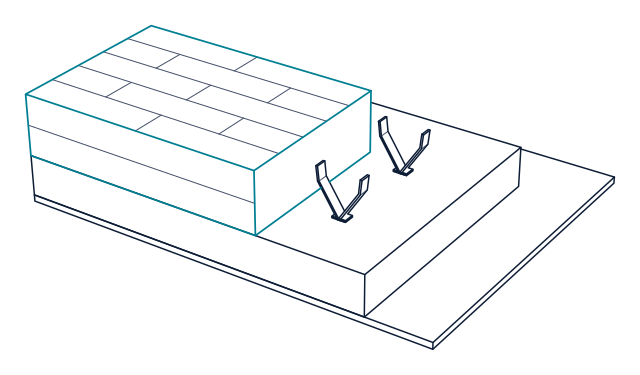
Layered lining of shell, insulating layer and hot face, anchored to the steel for fired equipment.
In short
Layered lining of shell, insulating layer and hot face, anchored to the steel for fired equipment. JJ Projects sources it to the specification the buyer names. Typical reference, standards: ASTM C401 (castable classification), API 936 (installation quality control), API 560 (fired heaters).
Specification references
Typical references only. The governing specification is the one on your purchase order or datasheet.
| Property | Typical reference |
|---|---|
| Standards | ASTM C401 (castable classification), API 936 (installation quality control), API 560 (fired heaters) |
| Layers | Insulating layer and dense hot face, per the lining design |
| Applications | Fired heaters, reformers, boilers, furnaces and reactors |
Specification references describe what the order names, not a certification held by JJ Projects.
Refractory
Typical uses
- 01Linings of fired heaters and furnaces
- 02Steam reformers, boilers and incinerators
- 03Reactors, ducts and transfer lines with high-temperature gas
- 04Relining during turnarounds
What to include in a request
A request with these details can be quoted without a round of questions. Send what you have and we will ask for the rest.
- 01Equipment type and service: heater, reformer, boiler, furnace or reactor
- 02Operating and design temperatures of the hot face and the allowable shell temperature
- 03Lining design: layers, thickness and materials, for example dense castable hot face over insulating castable or board
- 04Castable classification, such as ASTM C401, and the products specified
- 05Anchor system and layout, and the surface areas to line
- 06Application method, curing and dry-out requirements, and installation quality control such as API 936
- 07Documents: material data sheets and test reports required
Refractory
Related items
- 01Refractory anchorMetallic and ceramic refractory anchors, including V-type, that hold monolithic linings to the shell, with API 936 installation control and request details.Learn more
- 02FirebrickFireclay and high-alumina firebrick and insulating firebrick sourced to ASTM C27 and C155, in straights and special shapes, and request details.Learn more
- 03Shell-and-tube heat exchangerShell-and-tube heat exchangers fabricated to your thermal datasheet to TEMA and ASME Section VIII, and what the request needs, by TEMA type and tubes.Learn more
Guides
Guides
- 01Refractory lining basics: materials, anchorsHow refractory linings work in heaters, boilers and reformers: dense and insulating castables, firebrick, ceramic fiber, anchors, and why dry-out matters.Learn more
- 02Industrial procurement process, step by stepHow industrial procurement works, step by step: requirement, RFQ, bid tabulation, evaluation, award, PO, expediting, inspection, logistics and delivery.Learn more
Questions
Questions
01Why does a lining have more than one layer?
A dense hot face layer resists the process temperature, abrasion and chemical attack, while an insulating layer behind it lowers heat loss and keeps the steel shell cooler. The lining design sets the layers for each zone.
02What is dry-out?
Dry-out is the controlled first heating of a new lining that removes free and chemically bound water slowly. Heating too fast can build steam pressure and crack or spall the lining. The refractory manufacturer gives the heating schedule.
03What do ASTM C401 and API 560 refer to?
ASTM C401 classifies castable refractories by their properties. API 560 is the standard for fired heaters for general refinery service. They appear in lining specifications as references, and the project specification names which apply.
Send the specification. We will take it from there.
A material list, a drawing or a single line: tell us what the project needs and where it is going.