Transcript
Section through a refractory-lined wall, hot side on the left. The steel shell carries the structure. Inside it sits an insulating layer, and inside that the hot-face layer of brick, held to the shell by welded anchors. Hot gas heats the hot face and heat flows outwards through the wall. The temperature profile is illustrative: about 1200 degrees Celsius at the hot face, about 900 at the interface with the insulating layer, falling to about 180 at the inside of the shell and 170 at its outside. The insulating layer carries most of the drop.
What is a refractory lining and what does it do?
- Refractory
- A non-metallic material that keeps its strength and shape at high temperature and resists heat, abrasion and chemical attack in service.
A lining does three jobs. It protects the steel shell from temperatures that would weaken it. It reduces heat loss, which saves fuel and keeps the outer casing cooler. And in some equipment it resists erosion or chemical attack from the process stream.
Refractory linings appear in fired heaters, reformers, boilers, incinerators, reactors, flare stacks and transfer lines. The best design depends on the temperature, atmosphere, abrasion, thermal cycling and shell design in each case.
Transcript
Section through a refractory-lined wall, hot side on the left. The steel shell carries the structure. Inside it sits an insulating layer, and inside that the hot-face layer of brick, held to the shell by welded anchors. Hot gas heats the hot face and heat flows outwards through the wall. The temperature profile is illustrative: about 1200 degrees Celsius at the hot face, about 900 at the interface with the insulating layer, falling to about 180 at the inside of the shell and 170 at its outside. The insulating layer carries most of the drop.
How is a lining built up in layers?
- Steel shell. The pressure or structural boundary. The lining keeps its temperature within design limits.
- Backup or insulating layer. Lightweight material with low thermal conductivity that reduces heat flow to the shell.
- Hot face. The layer exposed to the process. It must resist the temperature, abrasion and chemistry of the service.
Temperature falls from the hot face to the shell. The designer sets layer thicknesses so that each material operates below its limit and the shell stays within its allowable temperature.
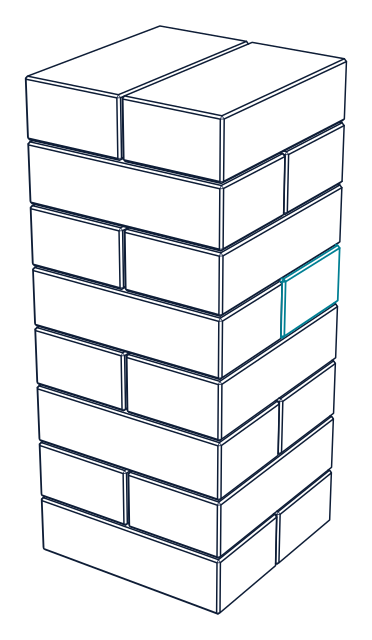
Some designs use a single monolithic layer. Others combine brick, castable and fiber in a composite lining.
What are the main refractory materials?
| Material | Form | Main characteristics | Typical role |
|---|---|---|---|
| Dense castable | Dry mix cast or gunned with water; hydraulic bond | High density and strength, higher thermal conductivity, abrasion resistance | Hot face; high-wear areas |
| Insulating castable | Lightweight dry mix cast with water | Low density, low thermal conductivity, lower strength | Backup layer or hot face with low abrasion |
| Firebrick (fireclay or high-alumina) | Shaped bricks laid with mortar | Predictable shape and strength; classified by alumina content and properties | Hot face in furnaces and boilers |
| Insulating firebrick | Lightweight shaped bricks | Low density, low conductivity | Backup or hot face in clean atmospheres |
| Ceramic fiber | Blanket, board, module, vacuum-formed shapes | Very light, low thermal mass, good for thermal cycling | Hot face or backup, where little abrasion is present |
| Plastic and ramming mixes | Moist mixes rammed in place | Easy to shape around complex geometry | Repairs, burner blocks, special shapes |
Properties are qualitative. Request density, thermal conductivity, maximum service temperature and strength from the manufacturer's data sheet for the exact product.
ASTM publishes classifications for these families: C27 for fireclay and high-alumina brick, C155 for insulating firebrick and C401 for alumina and alumina-silicate castables. They help buyers describe a product, but the manufacturer's data sheet decides the final selection.
What is the difference between dense and insulating castables?
Both are monolithic: mixed with water and placed as a single mass that sets, rather than laid as individual bricks. The difference is density and what follows from it.
- Dense castables are heavy and strong. They resist abrasion and mechanical damage but conduct heat well, so they need insulation behind them.
- Insulating castables are light. They conduct little heat but have low to medium strength and resist abrasion poorly, so they suit backup layers or protected hot faces.
A common arrangement puts a dense castable on the hot face and an insulating castable behind it. The dense layer takes wear. The insulating layer controls the shell temperature.
How do anchors hold a lining in place?
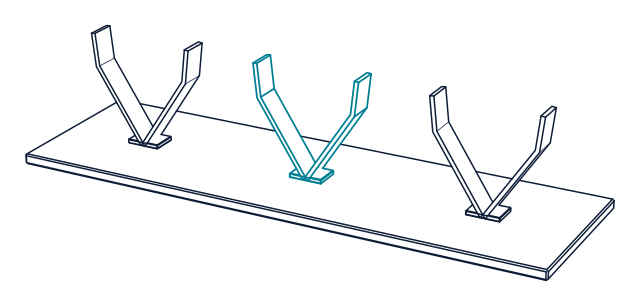
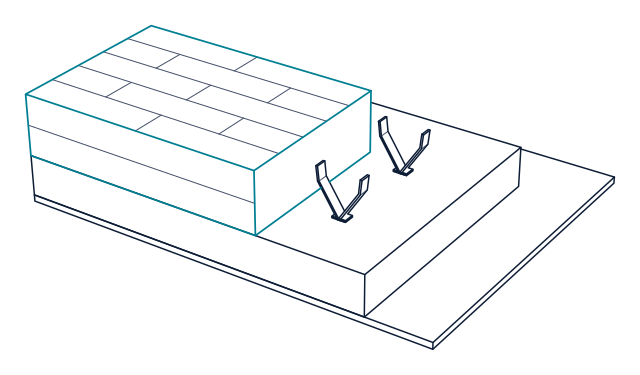
Anchors are metallic or ceramic supports welded or fixed to the shell that hold a monolithic lining against gravity, vibration and thermal movement. Without them, a lining would separate from the shell.
- V, Y and claw-type anchors are common in castable linings. They are welded to the shell at a spacing set by the designer.
- Material. Anchors exposed to high temperature use heat-resistant alloys. The alloy and tip temperature are part of the design.
- Expansion allowance. Many anchors carry a coating or sleeve so that the metal can expand inside the lining without cracking it.
Anchor type, spacing, material and weld quality are specified by the lining designer, not chosen at the purchase stage. When you buy anchors, specify them by the drawing or data sheet the designer provides.
How are monolithic linings installed?
- Casting. The material is mixed with water and poured behind formwork. Used for walls, roofs and floors.
- Gunning. The material is sprayed onto the surface with a gun. Used for large areas and repairs.
- Ramming. Plastic mixes are rammed into place.
- Brick laying and fiber installation. Brick is laid with mortar. Fiber is applied as blanket, module or board.
API Standard 936 sets installation quality control for monolithic linings: material and personnel qualification, installation, and dry-out. Many owners cite it in their specifications.
Why do dry-out and heat-up matter?
- Dry-out
- The first controlled heating of a new or repaired refractory lining, which removes free and chemically bound water slowly enough that steam does not damage the lining.
A new castable holds water from mixing and from the hydraulic bond. If heating is too fast, that water turns to steam inside a dense material, and the pressure can crack or spall the lining.
The principle is the same in every case: heat slowly, hold at set temperatures so moisture can leave, vent the shell, and monitor temperatures. The rates and hold times come from the lining manufacturer's schedule for the specific product. This guide gives no rates, because they depend on the product and the thickness.
The dry-out is part of commissioning. Plan it into the project schedule, and make sure a qualified person records the temperatures.
What should a refractory request include?
- Equipment type, location of the lining and design operating temperature
- Atmosphere and process conditions (oxidizing, reducing, abrasive, corrosive)
- Layer arrangement and thicknesses
- Material by layer, with quantities by weight or by area and thickness
- Anchor type, material and quantity, with the drawing
- Installation method: cast, gunned, rammed, brick or fiber
- Packaging, shelf life and storage conditions: hydraulic-bond castables are moisture-sensitive and carry a manufacturer-stated shelf life
- Documents: data sheets, test certificates and installation instructions
Handling ceramic fiber and dusty mixes needs controlled work practices and protective equipment under occupational exposure rules. State this in the work plan.
How can JJ Projects help?
JJ Projects supplies refractory materials and supports engineering for heaters, reformers, boilers and other high-temperature equipment, and represents Delta Refractories in Latin America. Send your lining data through Request a quote or see refractory materials.
Sources
- ASTM C401, Standard Classification of Alumina and Alumina-Silicate Castable Refractories
- ASTM C155, Standard Classification of Insulating Firebrick
- ASTM C27, Standard Classification of Fireclay and High-Alumina Refractory Brick
- API Standard 936, Refractory Installation Quality Control: Inspection and Testing Monolithic Refractory Linings and Materials