How do gate, globe, ball and check valves compare?
- Isolation vs throttling
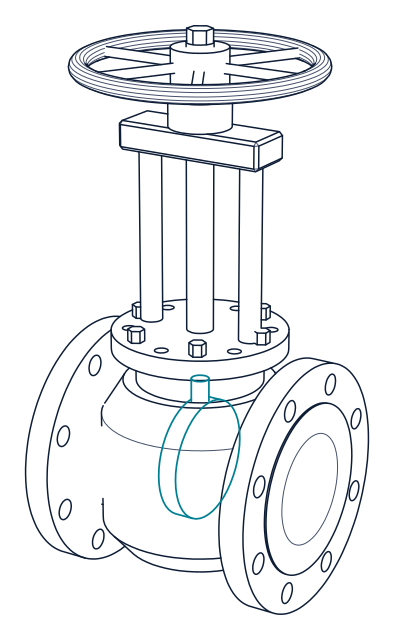
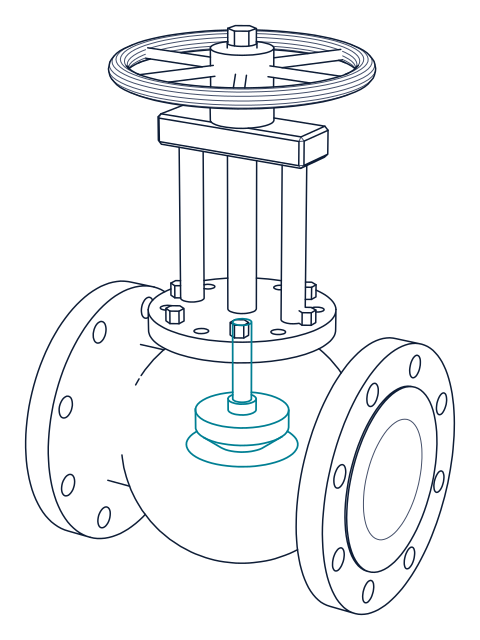
- An isolation valve is used fully open or fully closed. A throttling valve is used partly open to regulate flow, so its seat and disc see high-velocity flow. Most gate and ball valves are for isolation; a globe valve can do both.
| Item | Gate | Globe | Ball | Check |
|---|---|---|---|---|
| Main job | Isolate | Regulate, also isolate | Isolate quickly | Stop reverse flow |
| Operation | Many turns, slow | Many turns, moderate | Quarter-turn, fast | Self-acting |
| Pressure drop open | Low | High | Very low if full bore | Low to moderate, by type |
| Throttling | No | Yes | Not recommended | Not applicable |
| Tight shutoff | Good when seats are sound | Very good | Very good, best with soft seats | Not for isolation |
| Space | Tall with rising stem | Moderate | Compact | Varies by type |
| Standards often cited | API 600, API 602, API 6D | API 623, API 602 | API 608, API 6D | API 594, API 602, API 6D |
Usual practice, not a rule. The owner's specification and piping class decide the final choice.
The standards behind this table are covered in Valve types and standards.
Gate or ball valve for isolation?
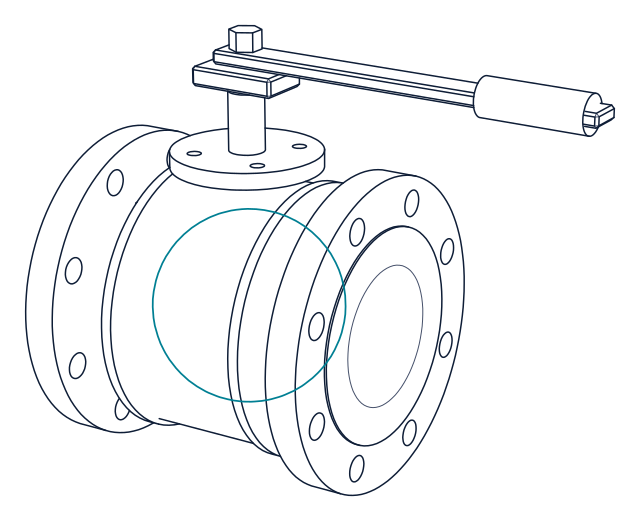
A ball valve closes in a quarter turn, shuts tightly and has a small footprint. Soft seats such as PTFE give very tight shutoff but limit temperature, so check the seat rating against the line. Metal-seated ball valves are used where heat, abrasion or fire risk rule out soft seats.
A gate valve opens and closes slowly, which protects long liquid lines from water hammer. Metal seats tolerate high temperature, so gate valves remain common in steam and hot hydrocarbon isolation. Two cautions apply: a solid wedge can bind after heating and cooling, and fluid trapped in the bonnet can pressure-lock the valve. Ask the manufacturer for the wedge type and a bonnet relief where the service cycles hot and cold.
- Fast closing in a long liquid line can cause surge. A gearbox on a ball valve slows the turn.
- Trapped liquid in a closed ball valve cavity can build pressure as it warms. Specify cavity relief, either a self-relieving seat or a vented ball, and keep the flow-direction mark.
- Fire risk calls for a fire-tested design for soft-seated valves. API 607 is the usual test reference.
When is a globe valve the right choice?
A globe valve seats a plug against a port, so travel is short and stem position tracks flow. It regulates well, shuts off tightly and can be repacked or repaired in line. The price is a higher pressure drop, because the flow turns twice inside the body.
Use a globe valve for manual flow adjustment, bypass lines, steam and drain isolation where tight shutoff matters, and for frequent operation. Install it with the flow arrow on the body matching the line, and confirm with the data sheet which side the pressure acts on.
Which check valve type fits the line?
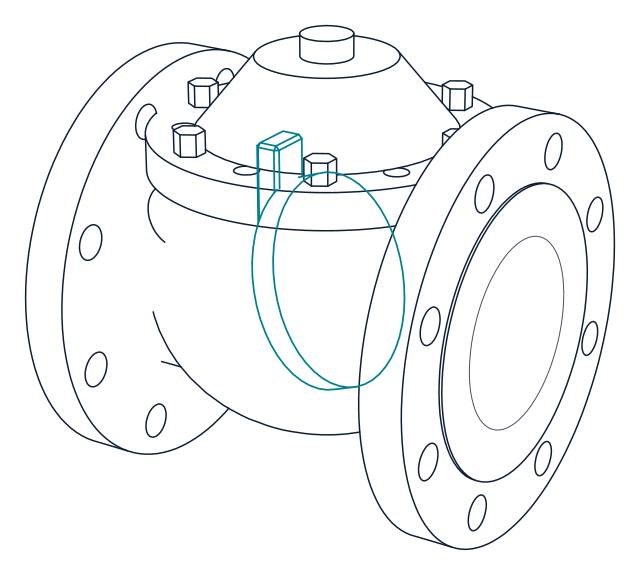
A check valve opens with forward flow and closes against reverse flow. Closing speed, pressure drop and orientation limits differ by type.
| Type | How it works | Strengths | Cautions |
|---|---|---|---|
| Swing | Hinged disc swings open | Low pressure drop, simple, repairable | Can slam when flow reverses; may chatter at low flow |
| Dual-plate (wafer) | Two spring-loaded plates fold open | Compact, lighter, quicker closing than swing | Plates and hinge need clean service |
| Lift | Disc or piston lifts off a seat | Suits high pressure and steam, small to medium lines | Higher pressure drop; mount per the maker's orientation |
| Tilting disc | Pivoting disc closes fast | Reduces slam on pump trips | More complex, higher cost |
| Nozzle (axial) | Spring-assisted disc on the axis | Very quick closing, quiet | Specialist item; confirm size and data |
Check the manufacturer's orientation limits. Many swing checks are for horizontal or vertical-up flow.
Install a check valve downstream of the pump and upstream of the pump isolation valve, so it protects the pump when the discharge is isolated. A check valve is not an isolation valve and may leak slightly, so add a block valve where leak-tight isolation matters.
How does the fluid change the choice?
| Service | Consider | Notes |
|---|---|---|
| Clean liquid or gas isolation, frequent operation | Ball valve | Soft seats for tight shutoff; check temperature limit |
| Steam isolation, hot cycling | Gate or globe valve, bolted bonnet | Metal seats; manage thermal binding and bonnet pressure |
| Flow regulation, bypass, small lines | Globe valve | Accept higher pressure drop |
| Slurry, solids or viscous fluid | Full-bore ball valve or knife gate valve | Avoid cavities that trap solids; check the maker's standard |
| Pig launching, pipeline service | Full-bore ball or gate valve to API 6D | Full bore passes pigs |
| Pump discharge | Check valve plus block valve | Pick the check type for pump behavior |
| Sour service | Any type, to NACE MR0175 / ISO 15156 | Specify materials and hardness. See the sour service guide |
Always confirm against the process data sheet and the piping class.
See NACE MR0175 / ISO 15156 for buyers when H2S is present.
What should a valve RFQ state beyond the type?
- Service fluid, pressure, temperature and the differential across the valve
- How often the valve operates, and whether it throttles
- Size, class and end connections; flow direction for globe and check valves
- Body, trim and seat materials; seat leakage requirement and test standard (API 598)
- Bore (full or reduced), fire-tested design, cavity relief and bonnet relief
- Operator: handwheel, gear or actuator
- Documents: EN 10204 3.1 for pressure parts and test reports
A valve data sheet answers most of these. Send it with the quote request.
How can JJ Projects help?
JJ Projects sources gate, globe, ball and check valves to specifications such as API 600, API 608 and API 594, and requests the test reports and certificates your order calls for. Send the valve list or data sheets through Request a quote, or see valves and process equipment.
Sources
- API Standard 600, Bolted Bonnet Steel Gate Valves for the Petroleum and Natural Gas Industries
- API Standard 608, Metal Ball Valves: Flanged, Threaded and Welding Ends
- API Standard 594, Check Valves: Flanged, Lug, Wafer and Butt-welding
- API Standard 598, Valve Inspection and Testing
- Engineering ToolBox, API valve standards
- Project Materials, What is API 6D?