What are the main valve types and what does each do?
- Valve trim
- The internal parts of a valve that touch the flow: seat, disc or wedge, and stem. Trim material is specified separately from the body.
| Valve | Motion | Main function | Standards commonly cited |
|---|---|---|---|
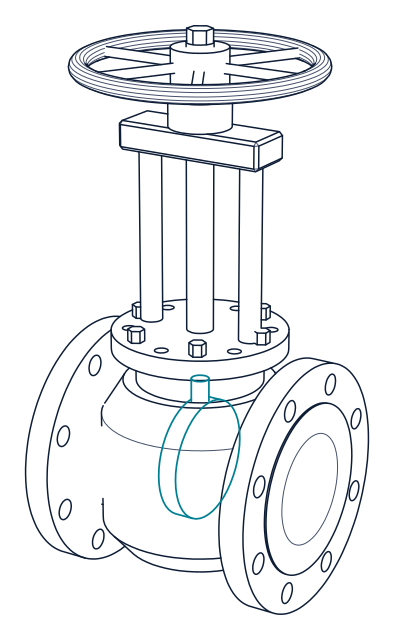
| Gate | Linear (rising or non-rising stem) | On/off isolation; low pressure drop when fully open; not for throttling | API 600 (bolted bonnet steel); API 602 (NPS 4 and smaller); API 6D (pipeline) |
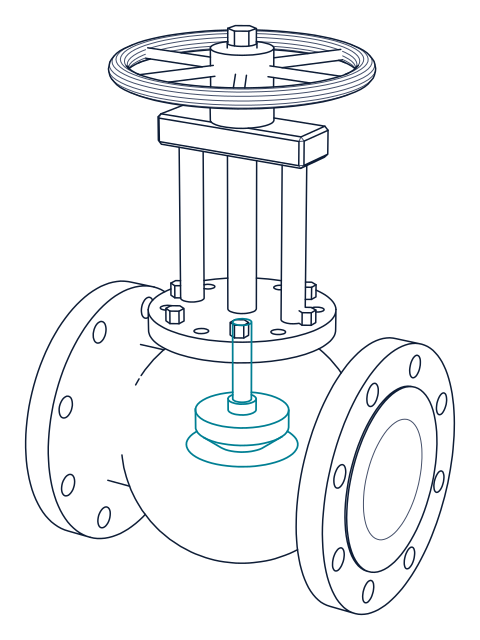
| Globe | Linear | Regulating and throttling; tighter shutoff than gate; higher pressure drop | API 602 (NPS 4 and smaller); API 623 (steel globe valves); ASME B16.34 |
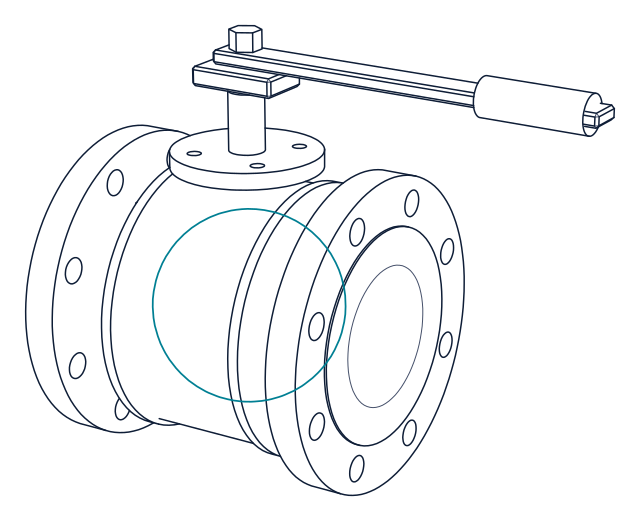
| Ball | Quarter-turn | Fast isolation; tight shutoff; full-bore or reduced-bore | API 6D (pipeline); API 608 (metal ball valves) |
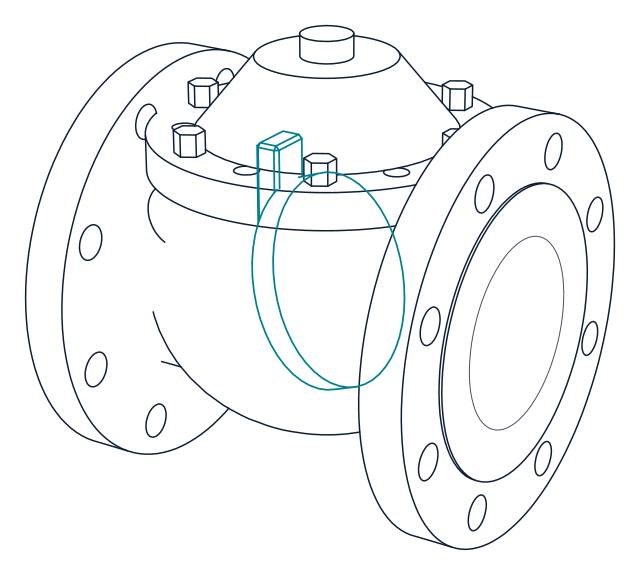
| Check | Self-acting | Prevents reverse flow: swing, lift, dual-plate and piston types | API 594; API 602 (NPS 4 and smaller); API 6D |
| Butterfly | Quarter-turn | Isolation or regulation in larger sizes; compact and light | API 609 |
| Needle | Linear, fine thread | Fine flow control and isolation in small-bore, instrument and sampling lines | Typically the manufacturer's standard, with ratings per ASME B16.34 where applicable |
Standard titles and scope change by edition. Cite the edition in the RFQ.
These lists describe usual practice, not a rule. The design basis and the owner's specification decide the valve type for each service.
When do you use a gate valve, and when a globe valve?
Use a gate valve to open or close a line fully. When open, the flow passes straight through with little pressure loss. A partly open gate vibrates and wears, so do not throttle with one.
Use a globe valve to control flow, or where frequent operation and tight shutoff matter. The flow path turns inside the body, so pressure drop is higher. Globe valves are directional, so the flow arrow on the body must match the line.
API 600 covers bolted bonnet steel gate valves with flanged and butt-welding ends. For small sizes, API 602 covers compact gate, globe and check valves of NPS 4 and smaller. It is the usual reference for forged steel valves.
How do ball, check and butterfly valves differ?
- Ball valves turn a bored sphere a quarter-turn. Open is straight through; closed is a seat seal. They suit fast isolation and tight shutoff. API 6D covers pipeline ball valves and API 608 covers metal ball valves with flanged, threaded and welding ends.
- Check valves open with forward flow and close against reverse flow. Swing checks have a hinged disc, wafer dual-plate checks are compact, and lift checks suit higher pressure drops. API 594 covers check valves with flanged, lug, wafer and butt-welding ends.
- Butterfly valves turn a disc a quarter-turn in the line. They are lighter and shorter than gate valves in large sizes. API 609 covers double-flanged, lug-type and wafer-type butterfly valves.
Check valves do not provide positive shutoff in the way a closed ball or gate valve does. Where leak-tight isolation matters, add a block valve.
What is a needle valve and where is it used?
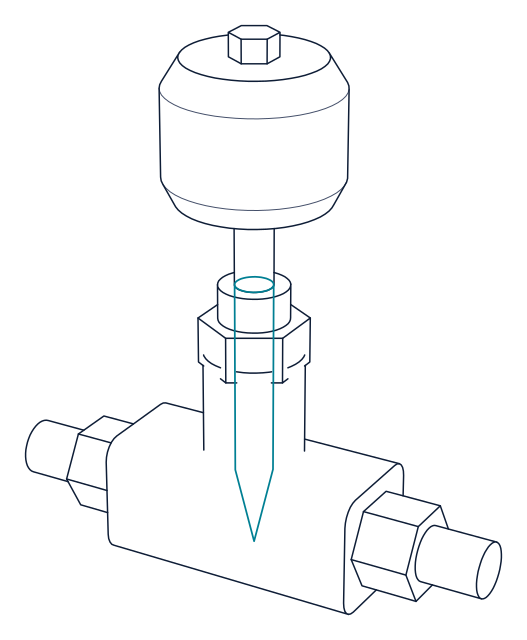
A needle valve has a tapered stem that seats in a small orifice. A fine thread gives precise adjustment of low flows. Needle valves appear on gauge and instrument connections, sampling lines and vents and drains.
There is no single API product standard for the usual instrument needle valve. Specify end connections, pressure rating, body and trim materials, and packing directly, and ask for the manufacturer's rating chart.
What does ASME B16.34 cover?
ASME B16.34 covers new valves with flanged, threaded, butt-weld or socket-weld ends. It sets pressure-temperature ratings by class and material group, and addresses dimensions, tolerances, materials, non-destructive examination, testing and marking. Classes run from 150 through 4500.
Like flanges, a valve's allowable pressure falls as temperature rises, and depends on the material group. See Flange pressure classes. A flanged-end valve must also match its end flanges in class, facing and size.
How are valves inspected and tested?
API 598 covers inspection, examination and pressure test requirements for gate, globe, plug, ball, check and butterfly valves. A typical regime has a shell test of the pressure boundary and seat tests for leakage. API 6D carries its own test requirements for pipeline valves.
- Fire testing. Quarter-turn valves with soft seats may be required to pass a fire test, for example API 607.
- Low emissions. Where fugitive emissions are limited, specify a type test such as API 624 or ISO 15848-1.
- Sour service. State NACE MR0175 / ISO 15156 when the service is sour. It affects materials and hardness.
- Documents. Ask for material test reports to EN 10204 3.1 for pressure-containing parts. See Material test reports.
How do you select a valve by service?
| Need | Consider | Notes |
|---|---|---|
| Full isolation, infrequent operation, low pressure drop | Gate valve | Allow time for operation; check stem packing and bonnet design |
| Frequent operation or throttling | Globe valve | Confirm flow direction and the pressure drop you can accept |
| Fast isolation with tight shutoff | Ball valve | Check seat material against temperature and service |
| Prevention of reverse flow | Check valve | Pick the type for the pump or line behavior; check orientation |
| Large line, space or weight limits | Butterfly valve | Check seat, shutoff class and pressure rating |
| Fine control in small-bore lines | Needle valve | Specify ends, rating and materials |
Use the process data sheet and the piping class to confirm the final selection.
The piping class usually defines the valve body material, trim, rating and end connections. Common body materials include forged carbon steel (ASTM A105), cast carbon steel (ASTM A216 WCB), low-temperature carbon steel (ASTM A352 LCC) and cast stainless steel (ASTM A351 CF8M).
What should a valve RFQ state?
- Valve type, size (NPS) and pressure class
- End connections and facing (for example RF flanged, butt-weld, socket-weld, NPT)
- Body, bonnet and trim materials
- Bore: full or reduced
- Operator: handwheel, gear or actuator
- Design standard (for example API 600) and test standard (API 598)
- Special requirements: fire test, low emission, NACE, impact testing
- Documents: certificates, data sheets and test reports
Send a valve data sheet if you have one. The guide How to write an RFQ covers the commercial fields.
How can JJ Projects help?
JJ Projects sources gate, globe, check, needle, and two- or three-way ball valves, along with process equipment, to specifications such as API 600 and ASME B16.34. Send your valve list through Request a quote or see valves and process equipment.
Sources
- API Standard 600, Bolted Bonnet Steel Gate Valves for the Petroleum and Natural Gas Industries
- API Standard 602, Gate, Globe, and Check Valves for Sizes DN 100 (NPS 4) and Smaller for the Petroleum and Natural Gas Industries
- API Specification 6D, Pipeline and Piping Valves
- API Standard 608, Metal Ball Valves: Flanged, Threaded, and Welding Ends
- API Standard 594, Check Valves: Flanged, Lug, Wafer and Butt-welding
- API Standard 609, Butterfly Valves: Double-flanged, Lug- and Wafer-type
- API Standard 598, Valve Inspection and Testing
- ASME B16.34, Valves: Flanged, Threaded, and Welding End
- Engineering ToolBox, API valve standards
- Project Materials, What is API 6D?